BEHIND THE JOURNAL · BEHIND THE CHASE
Aurora Borealis
How I Chase Her
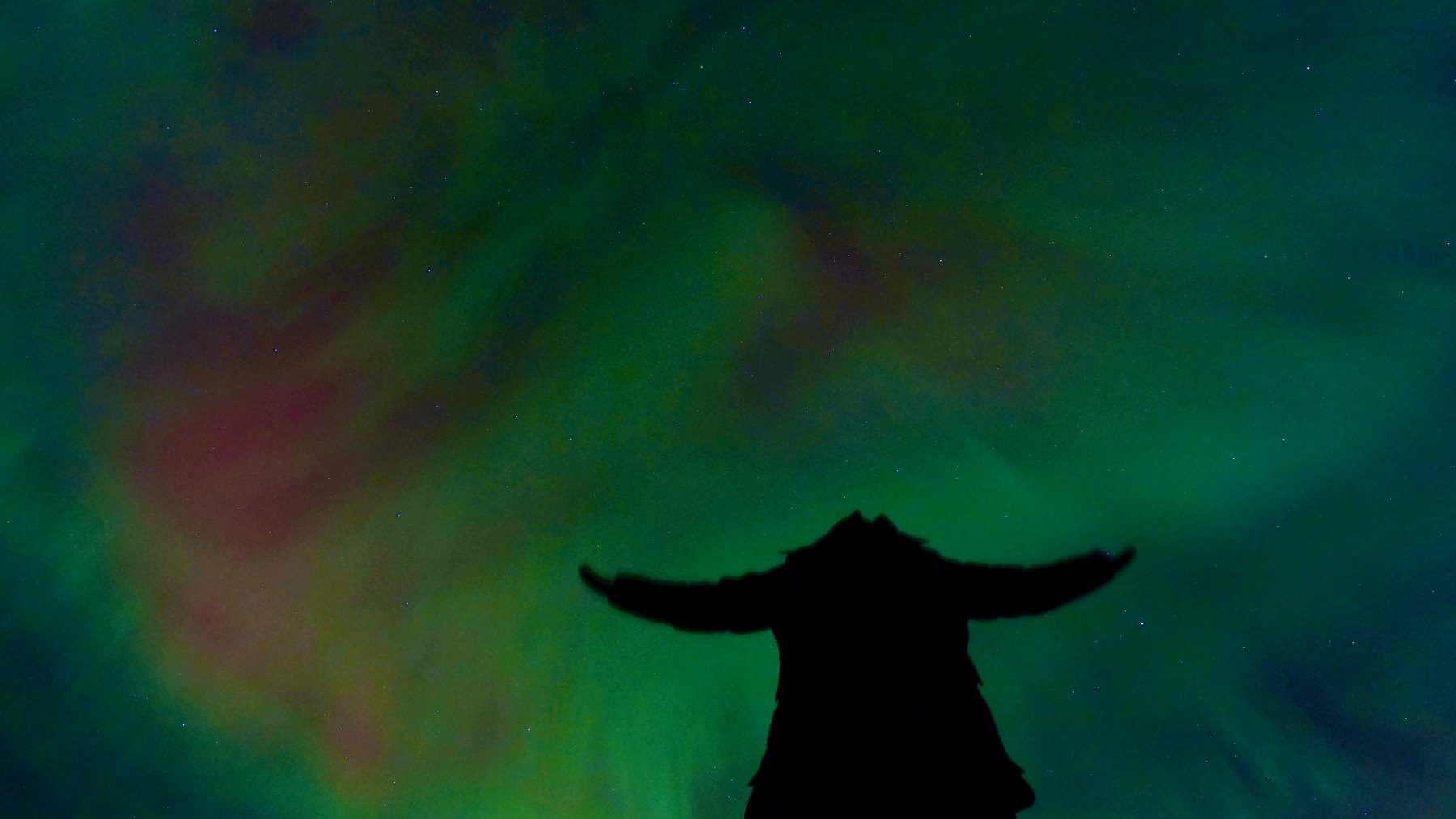
I’m Abhishek. The world takes me away, but the lights bring me back. This journal holds the memories. This guide shares the preparation that helps make a chase possible.
The secret is giving yourself a chance. A dark sky, a gap in the clouds, a little preparation. And then, luck.
In my first Norway chapter, cloudy nights meant waiting. When the sky finally cleared, I went out with a guide and found the lights. That patience is part of the story too.
Darkness · Clear sky · Activity · A safe place · Patience
01 · THE SKY FIRSTChase the opening in the clouds.
A strong aurora forecast cannot give you a view through thick cloud. Check the forecast for your exact location and viewing hours. Look at low, middle and high cloud separately, then play the timeline to see whether a clear patch is arriving or closing.
In Iceland, the Icelandic Met Office aurora map pairs cloud cover with an activity outlook. On that particular map, white means clear and green means cloud. Always read the legend: other maps use different colours.
02 · FOLLOW THE WEATHERWind tells part of the story.
Use an animated cloud forecast and recent satellite images to follow the movement of cloud gaps. Surface wind is useful for comfort and travel conditions, but clouds higher up may move in another direction. Do not use one wind arrow as a promise of clear sky.
Compare nearby places over the next few hours. Choose a reachable clear area, then check local warnings and roads before moving. Strong wind can make the journey unsafe even when the stars look perfect.
03 · THE LIGHTS ABOVEA number is a clue, not a promise.
Check the auroral oval and short term outlook alongside your weather. Kp is a broad measure of geomagnetic disturbance, not a personal sighting probability. Your latitude matters: low Kp can still bring a display beneath the auroral oval, while a big number cannot fix daylight or cloud.
Use NOAA’s Aurora Dashboard for space weather context. Yr also offers aurora forecasts and app notifications. Treat any app percentage as that product’s forecast, not a guarantee that you will see the lights.
04 · MOON AND DARKNESSCheck when the sky actually gets dark.
A northern destination in summer may never become dark enough. Check local twilight, then moonrise, moonset, phase and position for your viewing location. A bright Moon can wash out faint aurora, but it does not rule out a strong display. It can also light the snowy landscape in your photographs.
Timeanddate’s Moon page lets you choose your location. The phase alone does not tell you whether the Moon will be above your horizon that night.
05 · MY CHASE TOOLKITLess scrolling. More looking up.
These are useful planning tools to compare. My own favourite apps and personal settings will be added as I share them.
06 · ON THE NIGHTGive the moment time.
Find a dark location with a broad view and legal, safe parking. Start toward the northern horizon in the northern hemisphere, or south for aurora australis, but keep looking around and overhead. Let your eyes adjust. A camera may reveal colour before your eyes do; photographs can look more vivid than the view in person.
Bring warm layers, charged batteries, a tripod and enough time. Recheck conditions, but put the phone away sometimes. You came to see the sky, not only the forecast.
07 · THE PART YOU CANNOT PLANAnd then there is luck.
You can choose the place, study the clouds, check the Moon and wait through the cold. You still cannot tell the lights when to dance.
Leave space for a night that surprises you. Sometimes the forecast stays on your phone and the memory stays with you forever.
Planning guide, checked October 2026. Sources: Yr forecast guide, Canadian Space Agency viewing tips, NOAA viewing tips, Icelandic Met Office, Windy layer reference, Moon planning guide. This page links to forecasts; it does not display live conditions.
Back to the storiesA note before you pick up the car keys
The best chase is one you come home from.
I start with the sky, but I make the final decision with the road. A clear patch behind a closed pass is not a good recommendation. Wind, fog, snowfall, black ice, tiredness and a long return drive can matter more than any aurora score.
My little order of decisions
- Am I already near a sensible viewpoint?
- Is the route open, permitted and suitable for my car and experience?
- Are there weather, avalanche or travel warnings along the whole route?
- Will it be dark with enough clear sky? Is aurora activity modelled nearby?
- Can I park legally, walk safely and get back warm?
What the planner can and cannot do
The comparison uses local forecasts and a short-term aurora model. It shows named viewing access points, parking notes and walking estimates. It does not know your starting hotel, driving skill, tyre condition or whether a local path has just iced over.
Official road closures and restrictions always win. Never use a green weather tile as permission to drive. A later cloud gap is a weather opportunity; it is not a reliable aurora forecast many hours ahead.
Keep the official services close
Carry warm layers, traction for icy paths, a charged phone, a power bank, a headtorch and water. Download an offline map and share your plan. Use designated parking and keep gates, passing places and snow-clearing access clear. Stay off unverified lake ice and away from cliffs and breaking waves.
Open the country planner What I actually watch for
Read the sky, not one number
Kp is a global three-hour activity index. The local NOAA model estimates overhead auroral activity, not your chance of seeing it through clouds. Southward Bz can help energy transfer; speed alone is not enough. Moonlight can reduce contrast for faint aurora, but a bright moon does not cancel a strong display.
Look with your eyes too
A faint arc may look grey before it looks green. Give yourself time away from lights and screens. Check a current camera to understand the nearby sky, then look outside. A camera’s long exposure is not the same as your view. The website does not automatically recognise aurora in video.
Read the science, colours and old northern stories · Take your first aurora photograph